

Patient testimonial video for dental clinics: brief, questions and script
Updated 27 October 2026
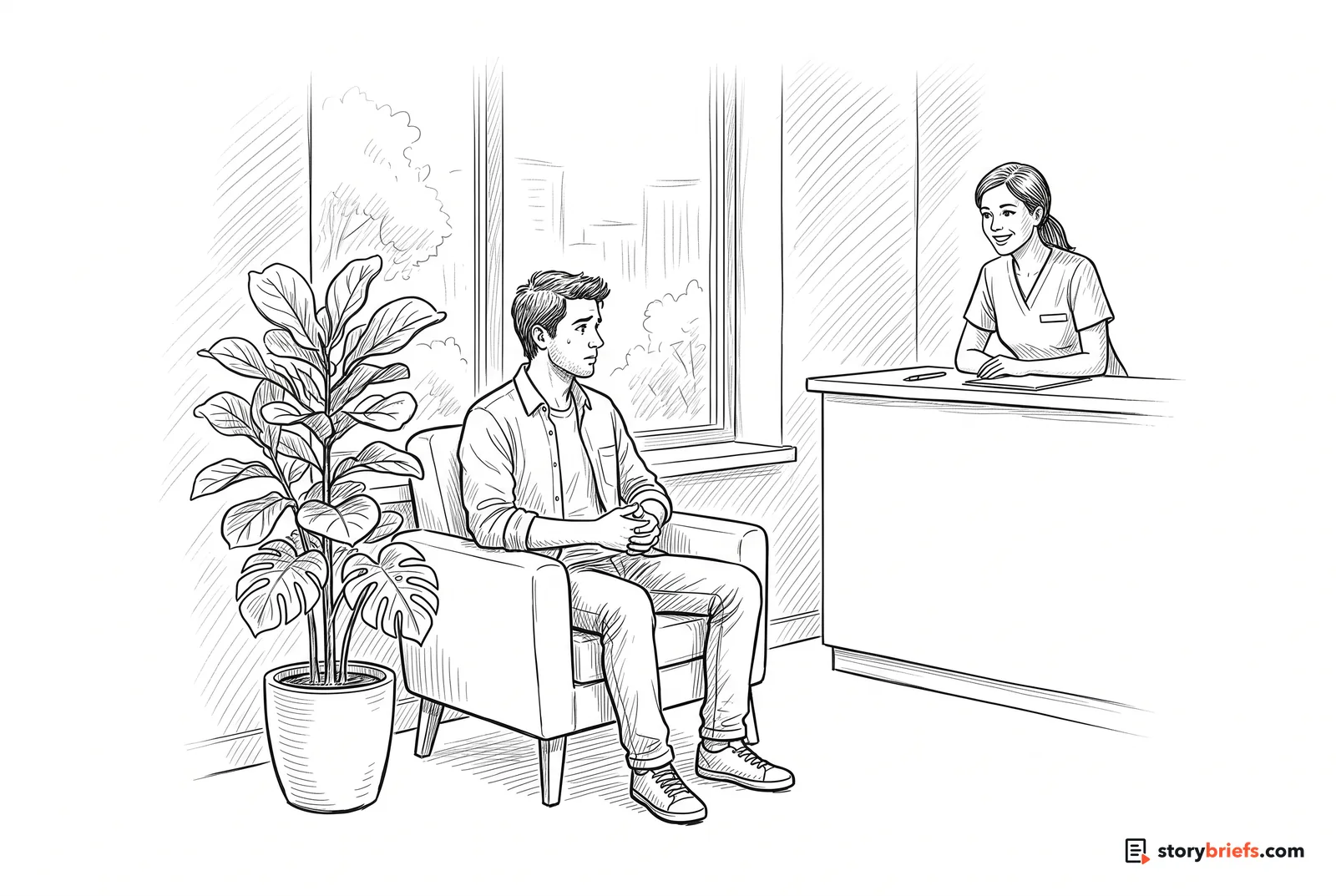
The best dental testimonials aren't about perfect teeth. They're about fear. Most people choosing a dentist are anxious, so find a patient who was nervous too, let them describe how it felt before, what put them at ease, and how they feel walking in now. Get written consent, keep clinical claims out of it, and keep it under 90 seconds.
- Length
- 45–90 seconds (15–30 s for social)
- Best for
- Converting anxious or price-sensitive new patients
- Where to use it
- Clinic website, Google Business Profile, Booking confirmation emails, Local social ads
- Production level
- One interview in the clinic, half a day
Why dental testimonials are different
Most businesses use testimonials to prove they’re good at what they do. Dental clinics have a different problem. Many people who need a dentist aren’t comparing clinics at all; they’re avoiding the decision.
That changes what the video is for. It isn’t “this clinic does great work.” It’s “someone as nervous as you walked in, and it was fine.” Build every part of the brief around that.
A note on rules: dental advertising is regulated in most countries, and some regulators restrict testimonials about clinical outcomes. Keep the story about how the patient felt and was treated, and check your local guidelines before you publish.
The story structure
Every StoryBrief follows the five steps of the Storification framework. Here's how each one applies to this video.
Start with the patient's fear or avoidance
Most prospective patients aren't comparing clinics on technology; they're putting off booking. Open on the patient's honest 'before': how long they'd avoided the dentist, what they were worried about, or the moment the problem couldn't be ignored.
“I hadn't been to a dentist in about six years. Honestly, I was scared of it.”
“I'd been chewing on one side for months and pretending it was fine.”
Show what the patient values in care
Patients choose dentists who share their idea of good care: being listened to, never being judged, knowing the cost upfront. Ask what mattered to them, and let viewers hear their own values in the answer.
“I just wanted someone who'd explain things and not make me feel bad about it.”
“I needed to know what it would cost before anyone started.”
Invite the viewer to be someone who looks after themselves
Don't end on 'book now'. End on who the patient has become: someone who doesn't dread check-ups, who smiles in photos again. The call to identity is 'you can be this person too'.
“Now I actually book my check-ups. I never thought I'd say that.”
“If you've been putting it off like I was, they get it.”
Make it the start of a patient series
Film several patients with different reasons for coming in (nervous patient, family, cosmetic, emergency) using the same questions. Invite current patients to share their experience with a simple review prompt after appointments.
“On screen: 'Nervous about the dentist? Hear from patients who were too.'”
Put it where nervous patients look
Place the full video on the 'new patients' and 'nervous patients' pages, add a 20-second version to your Google Business Profile, and send it in booking confirmation emails so new patients arrive calmer. Caption everything.
“Booking email: 'Before your first visit, here's what Sam thought before theirs.'”
Script template
| Beat | Time | Visual | Audio / VO |
|---|---|---|---|
| Cold open | 0:00–0:06 | Patient close-up in a calm, non-clinical spot (waiting room or outside) | Their honest 'before' line about fear or avoidance |
| Who they are | 0:06–0:15 | Patient in daily life (work, with family); first name only on screen | One or two lines on who they are, outside the dental chair |
| What held them back | 0:15–0:30 | B-roll: clinic exterior, the front door, reception | What they were worried about and how long they'd put it off |
| What made the difference | 0:30–0:50 | Friendly reception, dentist talking with (not over) a patient, treatment room with natural light | The small things that put them at ease: being listened to, explanations, clear costs |
| Who they are now | 0:50–1:05 | Patient smiling naturally, leaving the clinic | How they feel about the dentist now; who they'd tell |
| End card | 1:05–1:12 | Clinic name, 'New and nervous patients welcome', phone and URL | Music only |
Interview questions
- Before you came here, how did you feel about going to the dentist?Why: Most of your future patients share this feeling; it's the Origin.
- How long had it been since your last visit, and what kept you away?Why: Specific avoidance details make the story believable.
- What finally made you book?Why: Gives the turning point that viewers are waiting for themselves.
- What were you most worried about on the day?Why: Names the objection so the rest of the video can answer it.
- What did the team do that made a difference?Why: Gets concrete behaviours, not generic praise.
- What mattered most to you in choosing a dentist?Why: Draws out the Worldview: values the viewer shares.
- How do you feel about coming in now?Why: The emotional change, in their words.
- What would you say to someone who's been putting it off like you were?Why: Produces a natural, identity-based Invitation to close on.
Shot list
- Interview in a quiet, non-clinical space with soft window light
- Clinic exterior and front door (approachable, not intimidating)
- Reception team greeting someone warmly (use a staff member or consenting patient)
- Dentist explaining something with a model or screen, at eye level
- Treatment room details: natural light, comfort touches; avoid instruments in close-up
- Patient in their everyday life (optional, but makes them a person, not a case)
- Patient walking out, relaxed
What it costs
Ranges are USD for one finished video plus social cutdowns. Filming two or three patients on the same morning in the clinic is the most cost-effective approach. Avoid filming during patient hours unless everyone in shot has consented.
Common mistakes
- Close-ups of drills, needles or open mouths. They trigger exactly the anxiety you're trying to ease.
- Before-and-after claims about results. Many dental boards and regulators restrict testimonials about clinical outcomes, so check the rules where you practise.
- Using a patient's full name or treatment details without written consent that covers it.
- Interviewing the dentist instead of the patient. Keep the clinic team in the B-roll; the patient is the storyteller.
- Filming in a clinical white room with harsh overhead light. Find the warmest, calmest corner of the practice.
Useful tools
- Descript: transcribe and edit the patient interview, and add captions
FAQ
Can dentists use patient testimonials in advertising?
In many places, yes, with conditions. Some regulators (including Australia's AHPRA) prohibit testimonials about clinical aspects of care, while experience-based comments, like feeling welcomed, may be acceptable. Check your local board's advertising guidelines before publishing, and keep the story about the experience, not the clinical result.
What consent do I need from patients?
A written release that covers filming, where the video will appear, how long you'll use it, and whether their name is shown. Remind them they can withdraw. Never film other patients in the background without their consent.
Which patients make the best testimonials?
Patients who were nervous or had avoided care for a long time. Their story matches the biggest barrier your future patients face, which is fear, not price or location.
How long should a dental testimonial video be?
45–90 seconds for your website and 15–30 seconds for social and your Google Business Profile.